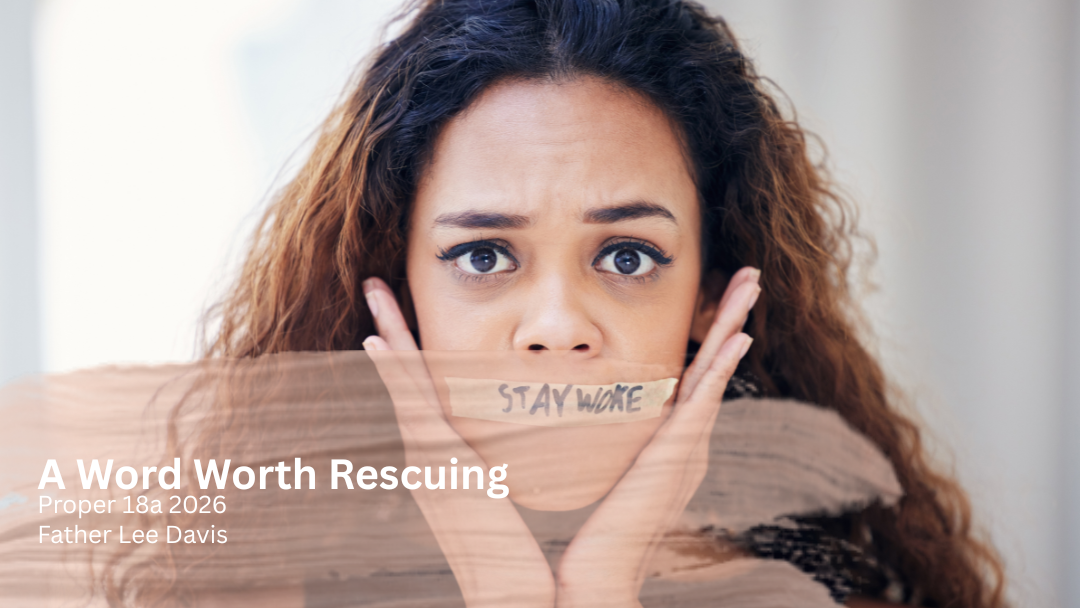

Yes, We are a Woke Church
Awake, Alive, Hopeful
The word “woke” has been twisted into an insult in our current culture wars. But at its root, it simply means to be awake—to see clearly, to notice injustice, and to act with compassion. And when we open the Bible, we find that being awake to God’s truth is not optional—it’s essential. This Sunday’s readings call us to be a woke Church because that is what faithfulness to God looks like.
Jeremiah 2:4–13 – Trading Living Water for Empty Cisterns
Through Jeremiah, God laments that the people have abandoned the fountain of living water for cracked cisterns that hold no water. They turned from justice and covenant love to idols that could never satisfy.
We see the same temptation today. Our nation trades compassion for cruelty at the border. We trade truth for revisionist history that tries to erase the voices of Black and Brown people. We trade love for policies that exclude LGBTQ+ children of God. These are cracked cisterns—systems that cannot sustain life.
But God calls us back. To be a woke Church is to reject those idols and cling again to the living water of Christ—justice, mercy, and love that never run dry.
Psalm 81:1, 10–16 – Listen to God’s Voice
The psalm is a song of joy and a plea: “But my people did not listen to my voice.” God longs for a people who are attentive and awake.
We live in a noisy world—shouting matches on social media, endless distractions, leaders who encourage us to close our ears to suffering. Yet God still speaks. God speaks through the cries of the hungry, through the voices of the oppressed, through the groans of creation itself.
A woke Church listens. We listen to God’s voice in prayer and Scripture, and we listen to our neighbors who have been silenced or ignored. And when we listen—God promises joy, strength, and life.
Hebrews 13:1–8, 15–16 – Love in Action
“Let mutual love continue. Do not neglect to show hospitality to strangers… Remember those in prison, as though you were in prison with them.”
This is what it means to be awake: to let our faith take flesh in love. Hebrews reminds us that worship is not just what we do in church on Sunday—it is how we live Monday through Saturday. It is how we treat the stranger, the imprisoned, the poor.
In an age where division and fear are weaponized, we proclaim Christ “the same yesterday and today and forever.” And because Christ is faithful, we can be bold in our love—confident that nothing we do in compassion is wasted.
Luke 14:1, 7–14 – Rewriting the Guest List
At a Pharisee’s banquet, Jesus challenges the seating chart and the guest list. Don’t scramble for honor, and don’t invite only those who can repay you. Invite the poor, the crippled, the lame, and the blind.
That is as radical now as it was then. Our culture tells us to build circles that protect our status and keep us comfortable. Jesus tells us to do the opposite—to widen the table until all are fed.
A woke Church doesn’t apologize for this. We don’t apologize for welcoming LGBTQ+ people. We don’t apologize for marching with immigrants. We don’t apologize for standing against racism, antisemitism, or Islamophobia. We don’t apologize for practicing the upside-down hospitality of Jesus Christ.
Awake, Alive, and Hopeful
To be woke is to be awake to God’s living presence and alive to God’s mission in the world. It means:
Rejecting empty idols that harm God’s children (Jeremiah)
Listening for God’s voice and the cries of the oppressed (Psalm 81)
Practicing radical love and solidarity every day (Hebrews)
Throwing open our tables with Christ-like hospitality (Luke 14)
Yes, we are a woke Church—not because it is trendy, but because it is faithful. And here is the good news: God has not given up on us. Even when we falter, even when the world mocks or resists, Christ is still at work.
So we stay awake. We stay hopeful. We keep our eyes open to injustice and our hearts open to love. Because a woke Church is nothing less than a faithful Church—awake, alive, and following Jesus into the world.